Interesting that in the Netherlands a lot of organizations preemptively took down websites and online applications running on PHP yesterday, but other countries were slow(er) to follow. Does that have to do with confidence in institutions being quite high here?
Nou, als je het echt wil weten…
Good comment on the Dots (OpenAI) and Muse (Meta) agent branding:
I see we’re now in our “make agentic LLMs as cute as possible so we go easy on them when they dox us” era.
What worries me far more is the future of DNS and domain names, which ultimately are under US control and with the Trump administration it is being used to force the deletion of domain names from DNS that the Trump administration doesn’t like. See social.wildeboer.net/@jwildebo…
We need alternative DNS and SSL infrastructure outside the control of the US. Which, if it happens, may eventually split the web in more influence zones (US, China, Europe, …?)
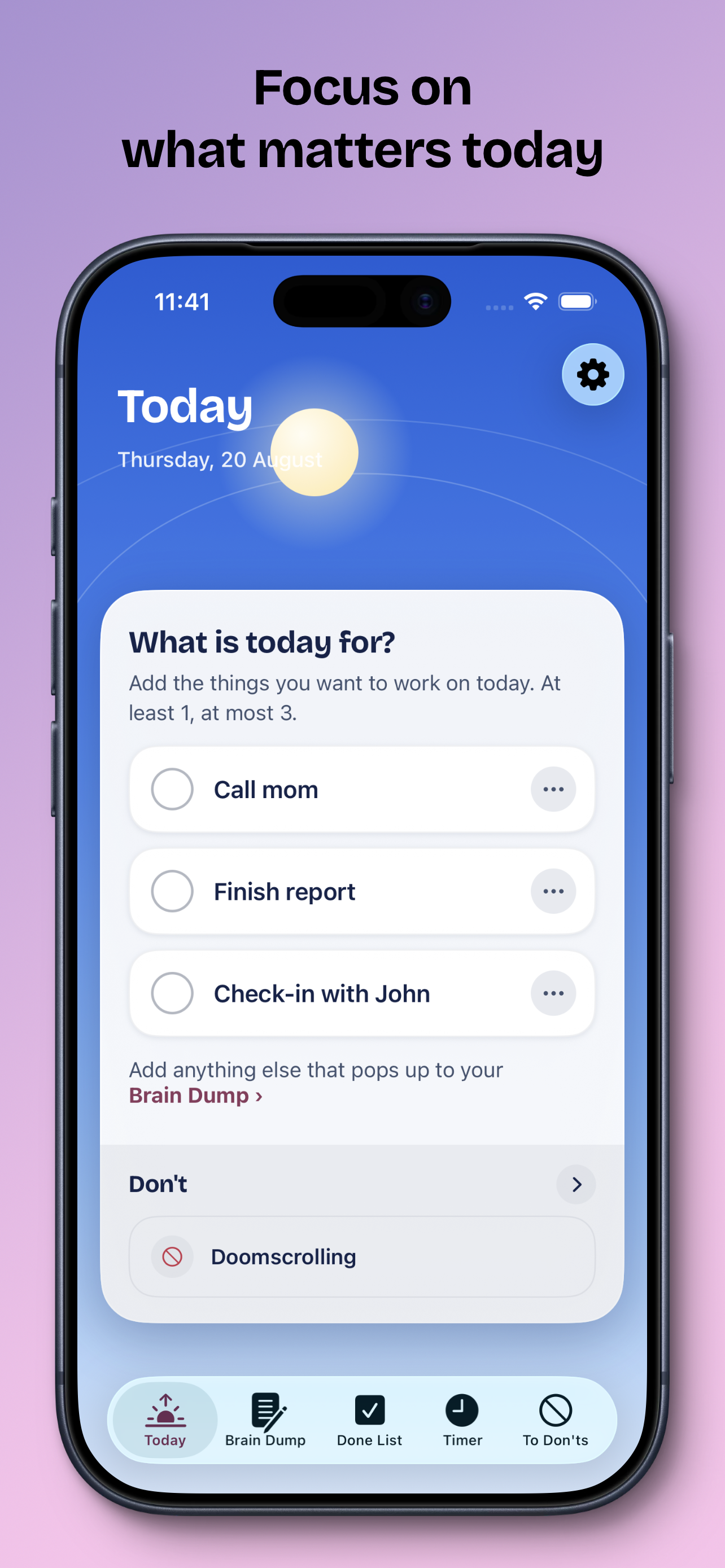
Just pushed a new Testflight build of my iOS and Watch app that helps you give attention to the things in your life that matter. Do give it a try, and let me know what you think.
My Macbook’s drive is at 85%, mostly due to a lot of photos stored in Photos.app. So I started looking around for an external SSD to move a lot of photos there (and planning to combine this with moving from iCloud to Immich). But seeing the actual price increases (at least doubled) is off-putting…
Thinking about adding two subtle tips you can dismiss to my iOS app, highlighting useful features only found in its settings. One is a Shortcuts integration enabling a focus mode with a focus timer, the other day start and day wrap-up notifications.
I’ve been building a small iOS app that holds the 3 most important things for my day. But it got a little out of hand, with a buddy macOS app, iCloud sync (and a Watch app). And you can now try the Testflight version. Do let me know what you think: testflight.apple.com/join/92m7…
After not using analytics on my side projects and sites for some time, I installed Umami on my VPS using Docker. Easy enough.
It even supports heatmaps and recordings!
Waarom jij straks het hulpje bent van AI, vertelt Cory Doctorow bij Tegenlicht.
Want de huidige GenAI-bubbel van 1,4 trillion dollar bestaat alleen bij de gratie van grootschalige automatisering en massa-ontslagen.
Maar hij verwacht dat de bubbel gaat klappen. En daarna, met veel afgewaardeerde chips, goede open source-modellen en allemaal slimme mensen, kunnen er mooie dingen kunnen ontstaan die wel van maatschappelijke waarde zijn.
Over the last weeks I created a simple iOS app as a side project. Submitted it to the App Store two days ago. But of course it was rejected by Apple.
I’m glad creating apps is not my day job. Gatekeepers… 🤬
There is an inexorable pace to technological advancement, almost physics-bound, akin to time itself, to the universe’s relentless inching towards total entropy. I know we (individuals, communities) can “choose” to move more slowly, but when systems (governments, markets, societies) crest some size, does the possibility of choice dramatically narrow? Evaporate? We’re in a narrow place of accelerating momentum.
Tonight I typed just one sentence into Google Earth and put refugees near the Mexican border. Then I planted a nuclear plant in Iran. Then I put a fatal crash on a street in Amsterdam. Google’s own satellite imagery underneath all three. What on earth is Google doing?
It’s not that Google is not reading the room. They clearly don’t care.
Every zeitgeist comes with new design idioms unique to its challenges. Many of them disappear as fads change, but others bake themselves into deeper parts of existing software interaction paradigms.
What current genAI design trends will we still encounter 10 years from now?
Dan zijn er natuurlijk mensen die overal en altijd de nuance zoeken, maar die komen veel met middenwegen waar je niet zoveel aan hebt: AI is gewoon een stuk gereedschap, en alles hangt af van hoe je het inzet. Dat is natuurlijk altijd waar voor alles. Maar gaan mensen het ook verstandig inzetten? Zouden ze weten hoe? Leiden we ze daar toe op? Daar hebben de genuanceerden het dan niet snel over. Ook meent men dat het met goede regulering best zou kunnen, zonder daarbij te vermelden dat overheden totaal machteloos blijken op dit vlak, en niet eens zin lijken te hebben om gedegen regulering te maken laat staan te handhaven.
Dat AI gewoon gereedschap is heb ik ook weleens gezegd. Met impliciet dat je het als organisatie dan wel verstandig moet inzetten. Kijkend naar echte toegevoegde waarde, intellectueel eigendom, aansprakelijkheid, onderhoudbaarheid, en natuurlijk de opbouw van je organisatie (verhouding junior/medior/senior, aanwezige kennis/specialismen, etc).
Shit, iemand gebruikt mijn telefoonnummer om mensen te bellen. En vervolgens gaan degenen die de oproep gemist hebben mij terugbellen. Meerdere keren per dag. Waar KPN dus niets aan kan doen. Grrrr… Het mobiele netwerk is zo prehistorisch beveiligd dat spoofing niet voorkomen kan worden…